


Line 'Em Up®: Strategy Board
3.769.00 Reviews
App Specs
- Version
- 2.0.25
- Updated On
- License
- Free
- Downloads
- 10,000+
- Developer
- Schultz Development ApS
- Categories
- Board
- Platform
- Android
Screenshots
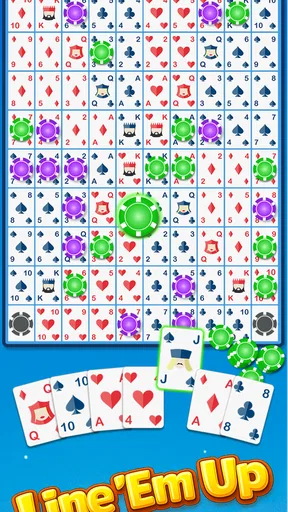



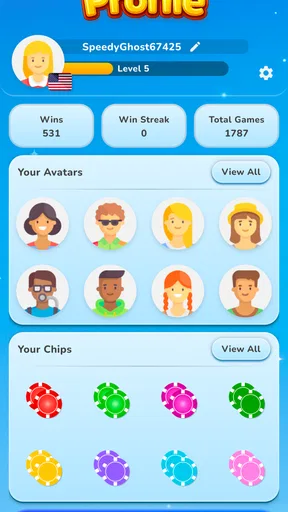

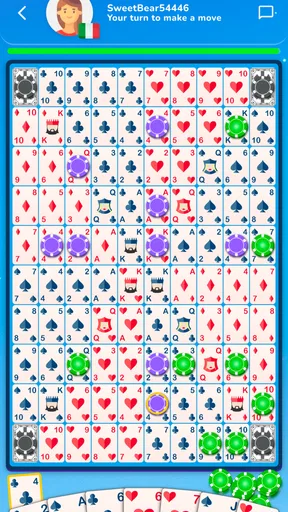
 Analysis by AppCompare
I found Line 'Em Up®: Strategy Board most interesting when I treated it less like a game to fill a few spare seconds and more like a small shared activity. It is a board game for Android, made by Schultz Development ApS, with a simple promise: two people can compete in a live match or take their time with up to a day between turns. That flexibility makes it a natural fit for a household where people are not always free at the same moment.
My first impression was that the game asks for attention rather than speed. The board format gives each move a clear consequence, so I could play it face to face when another person was available, then use the slower turn rhythm when schedules did not line up. It was easy to understand why the game has attracted more than ten thousand installs, although its average rating of 3.7 from roughly six hundred ratings also suggests that the experience will not suit everyone equally.
How it works as a shared household game
The strongest everyday use case is a shared device or a small circle of people who already know one another. Imagine two members of a household sitting at the kitchen table after dinner. A quick live match can become a short contest without needing a large group, complicated setup, or a long explanation. The board-game format keeps the interaction focused: one person makes a move, the other responds, and the conversation naturally grows around the choices.
The slower option changes the mood completely. If one person leaves for work and another has a different routine, a match can continue through the day with a turn available within a twenty-four-hour window. I would use that format with a friend or relative who enjoys strategy but does not want to reserve an entire evening. It also avoids the pressure of being online at exactly the same time, which is one of the practical reasons to choose this over a live-only board game.
That does not mean it is automatically ideal for every shared device. A board game built around opposing decisions works best when each player has a clear turn and a clear boundary. If several people are passing one phone around casually, the experience can become confusing unless everyone agrees who is playing and whose move is next. I would establish that before starting, particularly with children or guests who may assume that a device is available for unrestricted play.
The useful household rule is simple: decide who owns each match before anyone starts it. That small bit of coordination prevents a casual game from becoming mixed up with another person’s ongoing turn. It is especially important when several players use the same tablet or phone, because the game itself should not be expected to solve household identity problems that are better handled by the people using it.
Why the live and slower formats feel different
Live play is the better choice when I want a shared moment. It rewards immediate observation and makes every move part of a conversation. The drawback is that both players need to be ready, and interruptions can damage the rhythm. A household member answering a call or walking away for a chore may turn a brisk match into an awkward pause.
Worth Reading Before You Choose

EA SPORTS FC Mobile 26 Is a Bigger Football Game, but It Takes Time

Flipboard Shows What News Apps Must Do Beyond the Feed

Switching to Android Auto Means Rethinking Your Driving Routine

Google Calendar Makes a Crowded Week Easier to Manage

Ludo King Makes the Most of the Minutes Between Plans

Baby Panda World Brings Quick Play to Modern Phones, but Its Game Library Feels Busy
The twenty-four-hour turn format is more forgiving, but it is not simply a longer version of live play. It changes the game into something closer to a continuing challenge. I can consider a move, put the device down, and return later. That is convenient for busy adults, yet it also means the match can lose emotional momentum if players forget to check in. I would agree on a rough routine, such as looking at the game during a lunch break or in the evening, without assuming that every player will follow the same schedule.
This distinction is useful when choosing opponents. A competitive friend who likes quick decisions may prefer a live session. A relative who enjoys thinking slowly may be happier with the extended turn window. The same game can therefore serve two different social purposes, but only if the players choose the format honestly instead of expecting a relaxed match to behave like an arcade round.
Setting boundaries before the first move
Line 'Em Up®: Strategy Board is free to download, but it includes in-app purchases ranging from $1.99 to $99.99 per item. That is the most important setup conversation in a household, particularly when a child may use a parent’s phone or tablet. I would not hand over a shared device without first deciding who is allowed to make purchases and whether the game is intended only for free play.
The game is marked for Everyone, which makes it approachable from an age-rating perspective. That label should not be confused with a complete household policy. Younger players may understand the board and still need an adult to explain spending boundaries, turn-taking, and acceptable use of another person’s device. In my view, the safest approach is to treat the age rating as a guide to content suitability, not as permission for unsupervised account activity.
Account boundaries matter even when the game feels harmless. Before starting a match on a shared device, I would check which person is using the device and whether the current game belongs to that person. I would also avoid beginning a serious match while signed into a family member’s general app environment unless everyone understands what is happening. The goal is not to create unnecessary ceremony; it is to prevent a child, guest, or partner from accidentally changing the context of someone else’s play.
Another practical boundary is time. The slower mode can fit around school, work, and chores, but it can also tempt players to check repeatedly. I would set expectations that a delayed move is normal and that nobody needs to interrupt dinner or homework to respond immediately. That makes the game a pleasant background activity rather than another source of household notifications and reminders.
Coordinating matches without losing the fun
Because the game supports live play as well as extended turns, coordination is part of the experience rather than an afterthought. For a live match, I would arrange a specific moment and make sure both players have enough uninterrupted time. Even a short board game becomes less enjoyable when one person is distracted, rushing, or repeatedly leaving the room.
For a slower match, I would choose opponents who are comfortable with an open-ended rhythm. This is a good fit for two people who enjoy discussing strategy over time, but a poor fit for someone who wants a clear winner before moving on to another activity. The game’s flexibility is valuable, yet flexibility can expose differences in expectations. One player may see the match as a daily ritual while the other sees it as something to answer only when convenient.
A useful habit is to keep one ongoing match for a specific relationship rather than starting several loosely organized games. That makes it easier to remember the purpose of each contest and reduces the chance of confusing one opponent with another. I also prefer to finish a match before turning the same shared device into a general family gaming station. A little order makes the board feel intentional instead of disposable.
There is a social trade-off here. A live board game gives immediate reactions, teasing, and shared suspense. The slower mode gives more room for careful choices and accommodates different schedules. Neither is universally better. I would choose based on the relationship and the available time, not on the assumption that a longer turn limit automatically creates a deeper experience.
What younger players and adults should expect
The Everyone rating makes this a reasonable candidate for mixed-age households, especially when an adult wants a strategy game without a mature theme. The board format is also easier to explain than a large rules-heavy title. Still, the experience depends on the child’s patience and ability to accept a competitive result. A young player who enjoys arranging moves and waiting for an opponent may find it satisfying; a child looking for instant rewards may become frustrated.
I would introduce it by playing together rather than simply installing it and walking away. The first shared match is a chance to explain that the goal is not only to win but also to think ahead, respect the other player’s turn, and leave the device when the agreed play time ends. Those habits are more important in a household than squeezing the maximum number of matches into a day.
Adults should also remember that a child may interpret a slow response as rejection or unfairness, especially when the game continues across a busy day. A simple explanation helps: the opponent may be occupied, and the turn window allows waiting. If that kind of uncertainty is likely to cause arguments, a live match with both players present may be the better introduction.
Trust works in both directions. Children need clear limits around purchases and device use, while adults should avoid changing the rules halfway through a match simply because the result is not going their way. A consistent arrangement makes the game feel fair. Since the title includes optional purchases, I would keep the spending conversation separate from the excitement of winning, so a child does not associate a better result with asking for an item.
How it compares with familiar board-game alternatives
Compared with a physical board game, this title is more convenient when the players are apart or cannot keep a table occupied. There is no need to find and store pieces, and the slower turn format makes it possible to continue a contest around ordinary routines. The trade-off is that a digital board does not provide the same tactile feeling or the same easy overview that some people enjoy with cards, counters, and a board laid out in front of them.
Compared with fast mobile puzzle games, it asks for more commitment. A puzzle can often be opened, solved, and closed alone. This game is built around an opponent, so the enjoyment depends partly on another person’s availability and attitude. That makes it more social, but also less predictable. If I have only a minute and want a self-contained distraction, I would choose a different kind of game.
Compared with large online strategy games, it appears much easier to bring into a household routine. There is less pressure to learn an elaborate world or maintain a long-term competitive identity. That simplicity is a strength for casual players, couples, relatives, and friends who want a focused board contest. On the other hand, players seeking a broad campaign, a rich collection of modes, or a deep community environment may find the experience too narrow.
The best comparison is therefore not “better or worse” but “what kind of attention do you want to give?” Physical games are strongest for face-to-face atmosphere, quick solo games are strongest for instant access, and larger strategy titles are strongest for depth and variety. Line 'Em Up®: Strategy Board sits between those options, using a digital board to make two-player strategy easier to continue across real life.
Practical details before installing
The game was released on January 4, 2022, and the current version is 2.0.25. It requires Android 7.0 or later, so owners of older devices should check compatibility before planning to use a particular household phone or tablet. That is a small but worthwhile step when the device is shared and one person may be using an older handset.
Its free entry point lowers the barrier to trying a match, but the purchase range means I would treat it as a game to test first rather than something to buy into immediately. The right question is whether the board interaction and turn rhythm keep your household interested after the novelty of installation has passed. If two players enjoy returning to the same contest, the free starting point is useful. If nobody likes waiting for an opponent, optional spending will not solve the underlying mismatch.
The public response is mixed rather than uniformly enthusiastic: the game has around six hundred ratings, an average of 3.7, and roughly sixty-nine written reviews. I read that as a reason to approach it with realistic expectations. It is not a guaranteed favorite simply because it is easy to start. The experience depends heavily on finding an opponent with a compatible pace and on keeping shared-device use organized.
One non-obvious strength is that the slower format can turn a short board game into a small recurring connection between people who live busy lives. A parent and adult child, two siblings, or friends in different places can maintain a match without arranging a full evening together. The weakness is the same feature viewed from another angle: if either player forgets the match, the game can become background clutter instead of a meaningful activity.
My household verdict
I would recommend Line 'Em Up®: Strategy Board to households that want a focused, two-person board challenge and are willing to agree on device, time, and purchase boundaries. Its live option suits a shared moment, while the extended turn window is genuinely useful for people whose schedules do not overlap. The game is particularly appealing when the relationship matters as much as the result.
I would skip it for a family looking for a party game that supports everyone at once, for children who need constant action, or for players who prefer solo games with no waiting. I would also choose a physical board game instead when the main goal is a screen-free evening around a table. The digital format solves convenience and distance, but it cannot replace the atmosphere of handling a real board together.
For my own use, the deciding factor would be the opponent. With the right person, the game’s modest scope becomes an advantage: it gives us one clear contest without burying the interaction under menus or a complicated progression system. With the wrong person, even the convenient turn window feels like friction. That is why I see it as a relationship-driven board game rather than a universal mobile time-killer.
Overall, I think it is worth trying if you want a free entry into a strategic board match and can set sensible household rules from the beginning. Keep accounts and purchases separate, agree on whether the match is live or slow, and treat delayed turns as part of the design rather than a problem. Under those conditions, it can become a simple, repeatable way to compete with someone you know. Without that coordination, the same flexibility may make the game feel less like shared play and more like another unfinished task on a shared device.
Pros
- Simple rules make it easy for new players to start quickly.
- Short matches fit well into quick gaming sessions.
- Strategic positioning keeps each move meaningful.
- Clean board-focused design keeps distractions to a minimum.
- Suitable for players who enjoy thoughtful
- turn-based challenges.
Cons
- The minimalist presentation may feel plain to some players.
- Limited variety can make repeated matches feel familiar over time.
- Strategic depth may be modest for experienced board-game fans.
- A small player base could make online matchmaking less reliable.
- Some users may find the pace too slow for casual arcade gaming.
FAQs for Line 'Em Up®: Strategy Board
What is Line 'Em Up®: Strategy Board, and how is it played?
Line 'Em Up®: Strategy Board is a strategic board game focused on planning, positioning, and creating winning lines before your opponent does. Players place or move pieces according to the game’s rules while trying to block opposing moves and build their own combinations. It is easy to understand at first, but successful play requires anticipating several turns ahead.
Is Line 'Em Up®: Strategy Board suitable for beginners?
Yes, the game is generally accessible to beginners because its basic objective and board interactions can be learned quickly. However, the strategic depth becomes more noticeable after a few rounds. New players may need time to understand effective opening moves, defensive positioning, and how to recognize opportunities. Starting with easier matches or practicing against the game’s built-in opponent is recommended.
Can I play Line 'Em Up®: Strategy Board offline?
The availability of offline play depends on the version and platform installed. If the game includes local or single-player modes, these may work without an internet connection, making it convenient for travel or quick sessions. Online features, advertisements, updates, leaderboards, or multiplayer matchmaking may still require connectivity, so checking the store description and in-game requirements is advisable.
Does Line 'Em Up®: Strategy Board support multiplayer games?
Line 'Em Up®: Strategy Board may offer ways to compete against another person, depending on the current version and device. Multiplayer can include local pass-and-play matches or online competition, but the exact options may differ between Android and iOS. Before downloading, review the feature list to confirm whether the desired multiplayer mode, account requirement, or internet connection is supported.
Are there advertisements, in-app purchases, or privacy considerations?
Before installing Line 'Em Up®: Strategy Board, users should review its current store listing for information about advertisements, optional purchases, and data collection. Free games commonly use ads or offer paid upgrades, such as removing advertising or unlocking additional features. Permissions and privacy practices can change with updates, so checking the developer’s privacy policy is recommended before creating an account or making a purchase.


